How Many Ounces of Water Should You Drink Daily?
You have probably heard conflicting advice — "drink 8 glasses a day," "drink a gallon," "just drink when you're thirsty." The reality is that daily water intake is not one-size-fits-all. But there are evidence-based guidelines that work for most people as a starting point.
The National Academies of Sciences recommends a total daily water intake (from all sources including food) of approximately:
- Men: ~125 oz (3.7 litres) per day
- Women: ~91 oz (2.7 litres) per day
These figures include water from food, which typically contributes about 20% of total intake. For water consumed as drinks alone, the targets become roughly 100 oz per day for men and 73 oz per day for women.
The widely cited "8 glasses of water a day" (64 oz) is a useful minimum for many sedentary adults in mild climates, but active individuals and those in hot environments typically need considerably more. Understanding how to convert your daily goal between ounces, litres, and gallons helps you track intake across different bottle sizes — our oz to gallon converter makes that instant.
Water Intake Based on Body Weight
One of the most practical ways to personalise your daily water intake is to base it on your body weight. The formula most commonly recommended by nutrition professionals is:
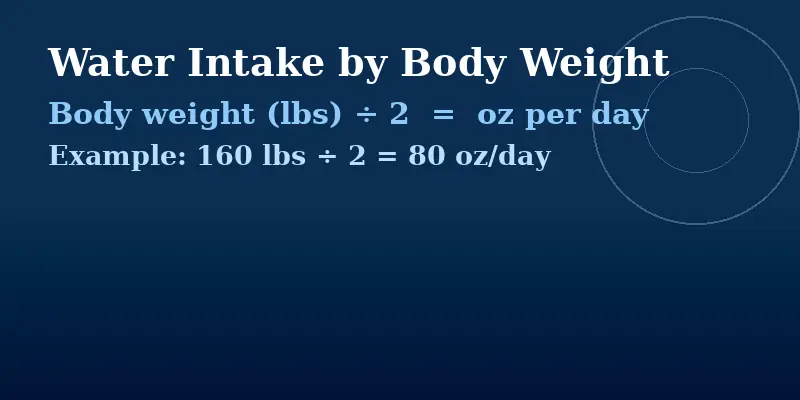
Body Weight Water Intake Examples
| Body Weight (lbs) | Daily Water Goal (oz) | Approximate Gallons | 16 oz Bottles |
|---|---|---|---|
| 120 lbs | 60 oz | ~0.47 gal | ~3.75 bottles |
| 140 lbs | 70 oz | ~0.55 gal | ~4.4 bottles |
| 160 lbs | 80 oz | ~0.63 gal | 5 bottles |
| 180 lbs | 90 oz | ~0.70 gal | ~5.6 bottles |
| 200 lbs | 100 oz | ~0.78 gal | 6.25 bottles |
| 220 lbs | 110 oz | ~0.86 gal | ~6.9 bottles |
| 240 lbs | 120 oz | ~0.94 gal | 7.5 bottles |
| 260 lbs | 130 oz | ~1.02 gal | ~8.1 bottles |
To convert your daily ounce target into gallons or litres, use our gallon to oz tool or the oz to liter converter. For tracking how many standard water bottles you need, see our full guide: How Many Water Bottles Make a Gallon?
Factors That Affect Daily Water Intake
Your baseline target is a starting point — several factors can push your actual daily need significantly higher or slightly lower:
Physical Activity Level
Exercise increases fluid loss through sweat. A general guideline is to add 12 oz of water for every 30 minutes of moderate exercise and up to 24 oz per 30 minutes of intense activity. A person who runs for an hour may need an additional 48 oz on top of their baseline — pushing total daily intake well past 100 oz.
Climate and Temperature
Hot, humid environments accelerate sweat loss dramatically. People living in hot climates or working outdoors in summer may need 20–40% more water than the standard formula suggests. Altitude also increases fluid loss through respiration.
Diet and Food Choices
About 20% of daily water intake typically comes from food. People who eat large amounts of fruits and vegetables (which are 80–95% water) naturally get more water from their diet. High-sodium diets, on the other hand, increase the body's demand for water to maintain electrolyte balance.
Health Status
Fever, vomiting, diarrhoea, and certain medications all increase fluid requirements. Kidney disease, heart failure, and other conditions may require fluid restriction — in these cases, always follow a doctor's guidance rather than general hydration formulas.
Pregnancy and Breastfeeding
Pregnant women generally need about 80 oz per day. Breastfeeding increases fluid needs further — the National Academies recommend approximately 104 oz daily for women who are nursing.
How to Calculate Your Daily Water Needs
Here is a simple step-by-step framework to estimate your personal daily water intake target in ounces:
- Start with your baseline: Take your body weight in pounds and divide by 2. This gives your baseline daily oz target.
- Add exercise adjustment: Add 12 oz per 30 minutes of moderate exercise planned for the day.
- Add climate adjustment: If you are in a hot climate or doing outdoor work, add 16–24 oz.
- Subtract dietary water: If you eat a diet rich in fruits and vegetables, you can subtract roughly 16–20 oz (your food covers that portion).
- Check your urine: Aim for pale yellow urine throughout the day — this is the most reliable real-time indicator that you are hitting your hydration target.
Example Calculation
A 180 lb woman who exercises for 45 minutes and lives in a warm climate:
- Baseline: 180 ÷ 2 = 90 oz
- Exercise (45 min): + 18 oz
- Climate adjustment: + 16 oz
- Total target: ~124 oz per day (just under 1 gallon)
At 124 oz, that person would need to drink approximately 7.3 bottles of 16.9 oz water, or just under one full gallon. See how gallons, ounces, and litres connect: What Is Oz and How Many Liters in a Gallon?
Signs You Are Not Drinking Enough Water
Most people wait until they are thirsty to drink water — but thirst is a late-stage signal of dehydration. The body is already mildly dehydrated by the time the thirst mechanism activates. Watch for these earlier indicators:
- Dark yellow or amber urine — the clearest and most reliable sign of dehydration
- Infrequent urination — urinating fewer than 4–6 times per day suggests inadequate intake
- Headaches — mild, persistent headaches are a common early sign of low hydration
- Fatigue and low concentration — even 1–2% dehydration measurably reduces cognitive performance and physical energy
- Dry mouth and lips — though this can also result from breathing through the mouth
- Dry skin — skin loses elasticity and appears dull when chronically under-hydrated
- Constipation — the colon draws water from stool when the body is dehydrated, making bowel movements difficult
- Dizziness when standing — postural hypotension is more common when plasma volume is low
Can You Drink Too Much Water?
Yes — though it is far less common than dehydration. Drinking excessive amounts of water in a short window can dilute the sodium concentration in the blood, causing a potentially dangerous condition called hyponatremia (water intoxication). Symptoms include nausea, headache, confusion, and in severe cases, seizures or coma.
For context, the kidneys can process approximately 0.8–1 litre (27–33 oz) of water per hour. Consistently exceeding this rate — for example, drinking 3–4 litres (100–135 oz) within a single hour — creates real overhydration risk. For the vast majority of people drinking water steadily throughout the day, this is not a concern.
Practical warning signs of overhydration include:
- Consistently clear (colourless) urine
- Nausea or bloating without illness
- Swelling in the hands or feet
- Drinking well beyond your calculated daily need without reason
If you are an endurance athlete or in a situation requiring very high fluid intake, electrolyte replacement (not just plain water) is important to prevent sodium dilution.
Best Times to Drink Water During the Day
Drinking the right amount of water is only part of good hydration — spreading intake evenly throughout the day prevents both dehydration spikes and the need to drink large volumes at once.
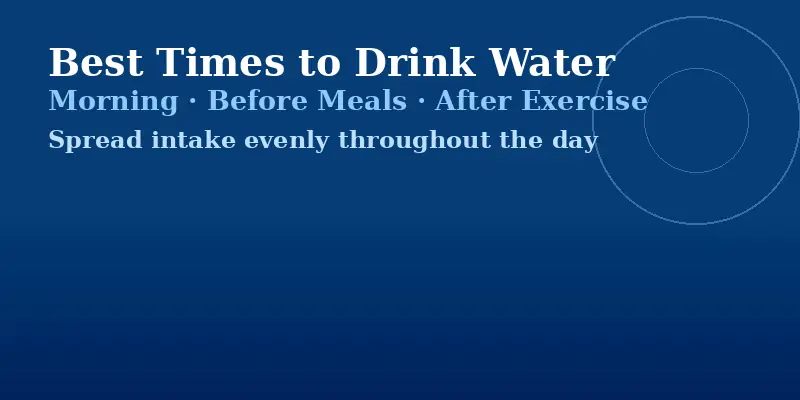
Morning (16–20 oz)
Drinking water immediately after waking rehydrates the body after 7–8 hours without fluids and jump-starts metabolism. Aim for 16 oz (one standard water bottle) before coffee or breakfast. Many people find this one habit alone noticeably improves their morning energy levels.
Before Each Meal (8–16 oz)
Drinking a glass of water 20–30 minutes before meals helps with digestion and can moderate appetite. If you eat three meals a day, this approach contributes 24–48 oz to your total before you even think about active hydration.
During and After Exercise
Drink 8–16 oz in the 30 minutes before exercise, sip regularly during activity (aim for 6–8 oz every 15–20 minutes), and drink at least 16–24 oz after to replace sweat losses. For intense or prolonged exercise, use electrolyte drinks rather than plain water.
Mid-Morning and Mid-Afternoon
The mid-morning (around 10 AM) and mid-afternoon (around 3 PM) slumps are often partly dehydration. A 16 oz drink at each of these times makes up a meaningful portion of your daily ounce target and can help sustain concentration and energy.
Evening (Moderate)
Avoid large amounts of water in the 1–2 hours before bed to prevent sleep disruption. A small glass (8 oz) is fine for most people and helps maintain overnight hydration without causing nocturnal bathroom trips.
Tips to Increase Daily Water Intake
Most people who struggle to hit their daily water goal do so not because they don't want to, but because they forget or find plain water unappealing. These practical strategies make consistent hydration much easier:
Use a Marked Water Bottle
Buy a large reusable bottle — 32 oz or 64 oz — with time markers or measurement lines printed on the side. Knowing you need to finish a 64 oz bottle by lunchtime and another by dinner gives you a clear, visual daily target. A 128 oz (one gallon) bottle makes the math simplest: finish it once a day.
Set Phone Reminders
Set an alarm every 1–2 hours labelled "Drink water." Even 6–8 alarms per day, each prompting an 8–12 oz glass, adds up to 48–96 oz without any concentrated effort. This works especially well during desk work or screen time when water intake is easily forgotten.
Eat More Water-Rich Foods
Cucumber, watermelon, strawberries, lettuce, celery, and oranges are 85–95% water by weight. Adding these to your daily diet contributes meaningful fluid intake without drinking anything extra. A large salad with cucumber and tomato can easily account for 8–12 oz of your daily water needs.
Infuse Your Water
Add lemon slices, mint, cucumber, or berries to a water pitcher to make plain water more appealing. Cold sparkling water is another useful alternative for people who dislike the taste of still water — it hydrates equally well.
Track Your Intake
Hydration apps like WaterMinder or MyFitnessPal let you log every glass. Alternatively, move rubber bands from one wrist to the other each time you finish a bottle. Either method builds awareness of actual vs target consumption.
For related hydration math — like how many water bottles equal a gallon or how ounces translate to litres — see: How Many Water Bottles Make a Gallon? and our oz to liter converter.
For evidence-based daily water intake guidelines, the Centers for Disease Control and Prevention (CDC) provides authoritative hydration recommendations.